The Hungary Golden Visa Program: a guide on obtaining a residence permit by investment
Hungary relaunched its Golden Visa and began accepting new applications on July 1st, 2024. Now, the minimum qualifying investment is €250,000 in approved real estate funds or €1,000,000 in a higher education institution.
The SPRINT Hungary Real Estate Development and Investment Fund became the first fund formally licensed for the Golden Visa and listed by the National Bank of Hungary.



- What is the Hungary Golden Visa?
- What benefits does the Hungary Golden Visa offer?
- What investment options remain under the Hungary Golden Visa?
- Who is eligible for a Golden Visa in Hungary?
- What are the other ways to obtain residency in Hungary?
- How can investors obtain permanent residence and citizenship in Hungary?
- How does the Hungary Golden Visa compare with other European investment residency options?
- How much does it cost to live in Hungary?
- What are the tax implications for investors in Hungary?
- Key takeouts: Hungary Golden Visa program
- Frequently asked questions
- Sources

What is the Hungary Golden Visa?
The Hungary Golden Visa, officially known as the Guest Investor Residence Permit, is a path to a residence permit for non-EU and non-EEA nationals and their close family members who invest in the Hungarian economy. It was relaunched on July 1st, 2024[1].
Under the current rules, the Golden Visa offers two investment options:
- Acquiring units in a government-approved investment fund with a minimum investment of €250,000. At least 40% of the fund’s net asset value must be invested in Hungarian residential real estate.
- Making a non-refundable donation of at least €1,000,000 to a public trust or institution that supports higher education, research, or cultural purposes in Hungary.
The initially proposed direct real estate purchase option never entered into force.
Successful applicants for the Hungary Golden Visa obtain residence permits valid for 10 years, which may be extended for another 10 years under the same investment conditions.
At renewal, fund-route investors must continue to hold qualifying units. If they have sold them, they must re-invest before applying for an extension. Donation-route investors are not required to make a new investment — the original €1,000,000 donation suffices for future renewal.
There are two similar terms that are often confused, but they refer to different stages of the process: the Guest Investor Visa and the Guest Investor Residence Permit. Together, they form the two consecutive phases of Hungary’s Guest Investor Program.
The Guest Investor Visa is a short-term entry document valid for up to 6 months. It allows foreign investors to enter Hungary, complete their investment, and prepare their residence application. This visa is required only for nationals whose passports do not provide visa-free access to Hungary.
Once the investment is completed, the applicant may apply for a Guest Investor Residence Permit, which grants long-term residence rights in Hungary for 10 years, renewable for a further 10.

Head of the Austrian office
With a Hungarian residence permit, the investor can live in Hungary, enter and leave the country freely, and travel within the Schengen area for up to 90 days in any 180-day period without additional visas. These benefits also extend to close family members: a spouse or recognised partner, children, and financially dependent parents.
To maintain their residency, Golden Visa holders do not have to move to Hungary or fulfill any other minimum stay requirements in Hungary.[2].

What benefits does the Hungary Golden Visa offer?
The Hungary Golden Visa grants investors and their close family members long-term residence rights in Hungary, along with a range of associated advantages relating to travel, taxation, lifestyle, and future citizenship.
1. Visa-free Schengen access for 90 days
Hungary is part of the Schengen Area, so its residence permit allows the holder to enter and stay in other Schengen states for up to 90 days in any 180-day period without the need for a separate short-stay visa. This 90/180 rule applies to the Schengen Area as a whole, not to each country individually.
The right to travel does not automatically confer other rights in those states, for example, the right to work, as the permit primarily covers freedom of movement.
2. Residency for 10 years
The Hungarian residence permit is granted for 10 years from the outset. Investors do not need to gather documents and apply for renewal every one to three years.
By comparison, the Greece Golden Visa must be renewed after 5 years, and the Portugal Golden Visa is valid for 2 years.
After 10 years, investors can renew their Hungarian residence permit for another 10 years.
3. Personal and business taxes among Europe's lowest
The personal income tax in Hungary is 15%. In comparison, personal income is taxed at 43% in Italy, 44% in Greece, and 47% in Spain.
The corporate tax in Hungary is 9%, while in Portugal, it is 31.5%, and in Greece, it is 22%.
Both income and corporate taxes in Hungary are among the lowest in Europe.
4. Relocation to a top‑20 safest country
Golden Visa holders can enter Hungary at any time, even if the borders are closed to foreigners. They can live there permanently or visit the country only occasionally.
Hungary ranks as the 17th safest country in the world, according to the Global Peace Index 2025[3].The index highlights the country’s low crime rate, political stability, and absence of internal or external conflicts. Major cities such as Budapest, Szeged, and Debrecen consistently achieve high safety ratings among expatriates.
Hungary’s rule of law, EU membership, and effective policing system ensure a high level of public safety and social order. Its strong legal framework protects property and investor rights, making Hungary a secure and predictable base for long-term residence and investment.
5. Access to high-quality education
Hungarian universities are included in the QS World University Rankings, with several among the top 1,000 institutions globally. According to the ranking, the University of Szeged is the best in Hungary[4].
Hungarian diplomas are recognised all over the EU, in the UK, and in the US; thus, Hungarian graduates can easily find jobs in these countries.
6. Access to world-class healthcare in Europe
Hungary is a country known for medical tourism. Foreigners usually come to enjoy thermal and mineral springs, which are beneficial for skin and blood pressure and help with relaxation in general. It is also popular to use the services of dentists and plastic surgeons.
Prices in Hungary are much lower than, for example, in Scandinavian countries, but the quality is competitive.
7. Opportunity to work and do business in Europe
All Hungary Golden Visa holders may establish and manage companies, engage in self‑employment, or take up salaried positions within Hungarian businesses. The permit also allows investors to act as directors or chief executives of their own companies registered in Hungary, granting them full legal capacity to operate in the local market.
Investors can register a company in Hungary within just a few days, benefit from simplified accounting rules for small enterprises, and gain access to both EU and Hungarian markets.
8. Living in one of the most affordable EU countries
In Hungary, a single person can live comfortably on around €1,000 per month, while maintaining a similar lifestyle in Italy would cost about €1,500.
The property prices in Budapest, the capital of Hungary, are significantly more affordable when compared to other European capitals. Specifically, one square metre in Budapest costs approximately 2.5 times less than in Stockholm, the capital of Sweden, and 2 times less than in Prague, the capital of the Czech Republic.
9. Opening bank accounts in Europe
Hungarian residents can open bank accounts in Hungary and other European countries quickly and easily. Usually, they are only required to provide their passport and a residence permit.
Non-residents usually hand in more documents, and the process takes more time for them. They can also be denied opening a bank account at all.
10. Citizenship in 11 years
The Golden Visa is one of the few Hungarian residence permits that can later lead to permanent residence and, eventually, citizenship. Investors can obtain permanent residency after 3 years of residing in the country with a residence permit. A further 8 more years later, they become eligible for citizenship by naturalisation.
Hungarian citizens can visit 171 countries visa-free, including all the Schengen states, the UK, Japan, and Singapore.
11. Rich nature and architecture
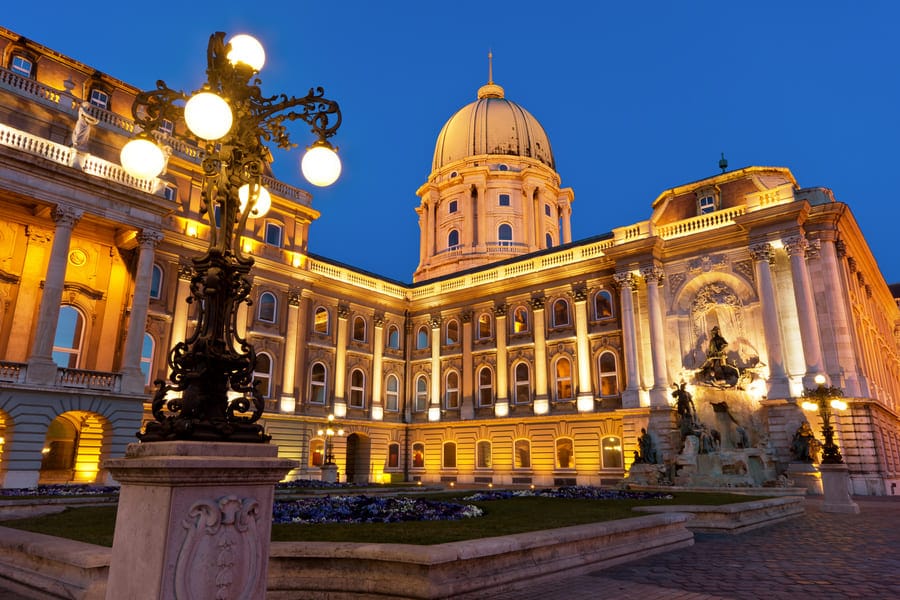
The foundation of Hungary dates back to the 9th century, but people lived on its territories long before that. Many historical sites, such as fortresses, churches, cathedrals, streets, and squares, are left from the old days.
Having a mostly flat landscape, Hungary is surrounded by mountains and hills. The second largest European river, the Danube River, flows through the country.
What investment options remain under the Hungary Golden Visa?
As of 2025, Hungary’s Guest Investor Residence Permit offers two routes for non-EU and non-EEA nationals seeking long-term residence. The initially proposed direct real estate purchase option was abolished before it ever took effect.
1. Investment in real estate fund units — €250,000
The investor must purchase units in a Hungarian real estate investment fund that is approved and registered with the Hungarian National Bank.
At least 40% of the fund’s net asset value must be allocated to Hungarian residential real estate.
The investment must generally be held for a minimum of five years before redemption or sale is permitted.
As of now, two authorised funds have been confirmed: the SPRINT Hungary Real Estate Development and Investment Fund and Gránit Asset Management’s qualified real estate fund. Further funds are currently pending licensing.
2. Non-refundable donation — €1,000,000
The investor must make a non-refundable donation of at least €1,000,000 to a Hungarian higher education institution or a public trust foundation performing public-interest activities such as education, research, or culture.
This donation does not generate any financial return or ownership rights.
The recipient institution or foundation must be officially recognised as a public-interest entity under Hungarian law.

Who is eligible for a Golden Visa in Hungary?
Non-EU and non-EEA investors who meet the financial and legal requirements may apply for Hungary’s Guest Investor Visa.
Investor
To qualify as the main applicant under the Hungary Golden Visa, the investor must meet all of the following criteria and provide documentary evidence for each requirement. The main applicant must:
- be over 18;
- be a citizen of a non-EU or non-EEA country;
- have a clean criminal record;
- prove a legitimate source of income;
- buy health insurance;
- declare any illnesses or serious health conditions, if applicable.
Investors must also register a residential address in Hungary, which typically involves leasing or purchasing property to comply with the address registration rules.
Family members
The application may include the following close relatives, provided that their relationship and dependency are documented:
- spouse or recognised partner;
- children under 18;
- financially dependent parents.
Parents can be included only if they are financially dependent on the investor, with pension payments being their sole source of income. If the parents are US citizens, they must also hold a valid second citizenship.
If any applicant holds a valid residence permit in another Schengen country, this must be declared.
Document requirements
When applying for Hungarian residence, the applicant has to submit the following documents:
- copies of all applicants’ passports, valid for at least 12 months;
- two passport photos for every applicant — not older than one month;
- health insurance for all family members;
- written confirmation of intention to fulfil the investment condition — when applying for a Guest Investor Visa;
- copy of the marriage certificate, if applicable;
- copies of the birth certificates, if applicable;
- proof of the legitimacy of the income;
- CVs for each family member over 18;
- detailed bank statements showing available funds;
- residence permit form;
- confirmation of investing — when applying for a residence permit.
What are the other ways to obtain residency in Hungary?
Foreigners can obtain Hungarian residence not only through investment but also via employment, business, study, or family reunification. In total, there are more than 20 legal grounds for residence permits in Hungary.
Employment
Residence permits are granted to employees, highly qualified workers, and intra-corporate transferees.
Employees get residency if they work for remuneration and are in an employment relationship.
Highly qualified workers obtain a so-called EU Blue Card[5]. To be eligible, they must earn a certain sum of money calculated by the Hungarian government and have the qualifications to do the job.
Managers, specialists, or trainee employees can be intra-corporate transferees. It means they can be transferred from a company branch outside the EU to a branch in Hungary. The main requirement is to be employed by the company as a manager, a specialist, or a trainee for at least 3 months.
Self-employment
Persons can obtain residency if they plan to work for remuneration as a self-employed worker[6]. They can also be the owner or manager of a legal entity or a member of such an entity's executive, representative, or supervisory board.
A self-employed worker must be registered in Hungary as a self‑employed entrepreneur.
Studying, doing research, or performing an official duty
Foreigners can obtain residency if they plan to study in Hungary for more than 3 months[7]. The requirements are the following:
- being accepted in a Hungarian educational institution as a full-time student or to attend a preparatory course;
- proving the appropriate language skills necessary to pursue the studies;
- having a travel document valid for the intended period of stay;
- securing accommodation;
- confirming sufficient financial means;
- buying health insurance.
Residence permits for scientific research are granted to persons who intend to conduct scientific research in Hungary. They must have a hosting agreement with a scientific organisation.
A residence permit for official duty is issued to people who stay in Hungary to study, perform educational or scientific activities, or train within the framework of an international agreement. Staff of scientific, educational, or cultural institutions operating in Hungary are also eligible if they work on an international contract.
Family reunification
Close family members who can obtain a residence permit are:
- spouse;
- minor dependent children;
- dependent parents;
- siblings or linear relatives if they can't support themselves for health reasons.
A relative living in Hungary must have a residence permit or permanent residency[8].
How to get a Golden visa and move to Hungary: a step-by-step guide
The processing time for obtaining a Hungarian residence permit depends on the individual situation of each investor and takes 5+ months.
Immigrant Invest conducts a preliminary check of the investor, which helps to discover and reduce the risks of a refusal to a minimum.
Certified Compliance Anti Money Laundering Officers undertake the completely confidential check. The investor provides only their passport.
Immigrant Invest lawyers provide the investor with a list of required documents. Then, lawyers translate and notarise them.
On behalf of the investor, lawyers apply for the Guest Investor Visa, which is the first step to a residence permit.
The Guest Investor Visa is issued for 6 months. The investor must visit Hungary and apply for a residence permit within this period.
Applicants whose passports allow visa-free entry to Hungary do not need to obtain a Guest Investor Visa.
The applicant travels to Hungary on a Guest Investor Visa to finalise the investment agreement with the fund or educational institution. They must also buy or rent residential property, as a registered address is required to obtain a residence permit.
The residence application can be submitted in person at the National Directorate‑General for Aliens Policing or online via the Enter Hungary platform. If represented by a legal agent or company, submission must be made online.
Regardless of the method, the applicant must be physically present in Hungary at the time of application submission.
The investor has 3 months after submitting the residence application to complete the investment, either by purchasing fund units or by making a donation to a higher education institution.
The application is processed within 21 — 30 days, and the residence permit card is issued within 7 days after approval.
Immigrant Invest receives the cards and arranges secure delivery to the investor.
How can investors obtain permanent residence and citizenship in Hungary?
The Hungary Golden Visa provides a long-term pathway leading from temporary residence to permanent residence and, eventually, to Hungarian citizenship by naturalisation.
1. From visa to long-term residence
The process begins when an investor applies for a Guest Investor Visa, valid for up to 6 months. This visa allows the applicant to enter Hungary, finalise the qualifying investment, and submit a residence application to the National Directorate-General for Aliens Policing, NDGAP.
After completing the investment, the applicant receives a Guest Investor Residence Permit, valid for 10 years and renewable for another 10. This permit grants the investor and their family members the right to live, study, and work in Hungary, as well as travel freely within the Schengen Area for short stays of up to 90 days within any 180-day period.
2. Transition to permanent residence
Investors may become eligible for permanent residence after 3 continuous years of living in Hungary, provided they have maintained legal status and fulfilled all tax and residency obligations[9].
Applicants must demonstrate:
- continuous residence in Hungary during the qualifying period;
- stable income and financial self-sufficiency;
- registered address in Hungary;
- no criminal convictions and compliance with national laws;
- basic knowledge of Hungarian language, history, and culture, confirmed by an official exam;
- evidence that granting permanent residence serves Hungary’s national interests, such as proven integration, contribution to society, or economic benefit.
The National Residence Card grants indefinite stay rights in Hungary and simplifies access to public services, employment, and family reunification procedures.
3. Pathway to Hungarian citizenship
After 8 years of continuous residence, holders of a permanent residence permit may apply for citizenship by naturalisation[10]. Requirements include:
- proof of long-term legal residence;
- clean criminal record;
- evidence of integration into Hungarian society;
- basic proficiency in the Hungarian language, tested during the application process;
- passing a citizenship exam that tests knowledge of the Hungarian language, history, and culture.
In certain cases, such as marriage to a Hungarian citizen, the naturalisation period may be shortened to three to five years. It may also be reduced for applicants who have rendered exceptional services in Hungary’s national interest, for example, significant cultural, scientific, sporting, or philanthropic contributions.
Once granted, Hungarian citizenship provides full EU citizenship rights, including visa-free travel to more than 170 countries, the right to live and work anywhere in the European Union, and access to high-quality healthcare and education systems across Europe.
Hungary recognises dual citizenship, so new citizens are not required to renounce their first nationality.
How does the Hungary Golden Visa compare with other European investment residency options?
The Hungary Golden Visa offers one of the fastest paths to residency by investment in Europe. It also provides one of the longest temporary residencies among European options.
Let’s compare the Hungary Golden Visa with investment routes in Malta, Italy, Cyprus, and Andorra, as well as in Greece and Portugal, across key criteria.
European Golden Visa comparison: investment, timing, citizenship
| Country | Minimum investment | Status | Obtaining time | Validity | Path to citizenship |
| Malta | €169,000+ | Permanent residence | 6+ months | Indefinite | 5 years |
| Hungary | €250,000+ | Temporary residence | 5+ months | 10 years | 11 years |
| Italy | €250,000+ | Temporary residence | 4+ months | 2 years | 10 years |
| Greece | €250,000+ | Temporary residence | 4+ months | 5 years | 7 years |
| Portugal | €250,000+ | Temporary residence | 12+ months | 2 years | 5 years |
| Cyprus | €300,000+ | Permanent residence | 9+ months | Indefinite | 8 years |
| Andorra | €600,000+ | Temporary residence | 2+ months | 2 years | 20 years |
How much does it cost to live in Hungary?
Hungary offers one of the most affordable costs of living in the European Union, while maintaining a high standard of comfort, safety, and services.
Living expenses depend on lifestyle and location, with Budapest being the most expensive city, followed by Debrecen, Szeged, and Pécs.
Salary
The average gross salary in Hungary is around €1,750, and after taxation, it amounts to approximately €1,230.
On average, a single person needs around €900—1,200 per month, including rent, utilities, transport, and groceries. A family of four can expect monthly expenses of €2,500 — 3,000, depending on their housing and schooling choices.
Housing and utilities
Renting a one-bedroom apartment in the centre of Budapest costs €600 per month. Depending on location, the price for renting a three-bedroom apartment in Budapest ranges from €800 to 1,000 per month.
You need to pay around €150 per month for utilities, including electricity, water, heating, cooling, and taking out the garbage in Budapest. The Internet for a month costs approximately €15.
Food
A person spends around €10 for a meal in an inexpensive restaurant, and a cup of coffee costs €2.
A food basket consisting of bread, milk, cheese, eggs, chicken fillets, some fruit, and vegetables costs around €30. A bottle of wine and domestic beer bought in a supermarket are €5 and €1.5, respectively.
Transportation
Residents usually buy monthly passes for all types of public transport for roughly €30. There are discounts for pupils, students, parents of small children, and pensioners. Children under 14 use public transport free of charge.
Taxis are much more expensive. Taking a taxi from, for example, Budapest Ferenc Liszt International Airport to the city centre is approximately €50.
If you're driving a car, a litre of gasoline would cost you around €1.5.
Entertainment
A person pays approximately €9 for a cinema ticket, and €50—100 is the cost of a ticket to a theatre. Visiting Szechenyi Thermal Baths on weekends costs €31.5.
The price for a monthly gym membership is around €50.
What are the tax implications for investors in Hungary?
Hungary offers one of the most competitive and transparent tax systems in the European Union, benefiting both residents and non-resident investors.
For non-resident investors, tax obligations apply only to income sourced in Hungary, such as rental income from Hungarian property, dividends, or profits from Hungarian-registered companies.
Income earned abroad is not subject to Hungarian taxation, provided the investor’s tax residence remains outside Hungary.
Personal income tax
Hungary applies a flat 15% personal income tax. Tax residents, those who live in Hungary for more than 183 days a year or have their main economic interests there, pay this tax on their worldwide income.
In addition to income tax, individuals contribute 18.5% in social security contributions, which cover healthcare, pensions, and other welfare benefits. Employers also pay social charges on behalf of their employees, typically around 13% of gross salary.
Corporate tax
Hungary’s corporate income tax, CIT, is 9%, the lowest in the European Union. This rate applies to both domestic and foreign-owned companies registered in Hungary.
Dividends distributed by Hungarian companies to non-resident shareholders are generally exempt from withholding tax, provided the recipient is based in a country that has a double taxation agreement with Hungary.
Property taxes
When purchasing real estate, buyers pay a stamp duty based on the property’s market value:
- 4% on the portion of the property’s value up to €2,600,000;
- 2% on the part exceeding €2,600,000, with the total tax amount capped at about €520,000.
Additionally, new properties typically include a 5% VAT in the sale price.
Hungary levies an annual local property tax, set by municipalities, usually equalling to up to 3% of the property’s market value or up to €3 per square metre, depending on the local rules.
If real estate is sold within five years of purchase, capital gains tax at 15% applies to the profit, with the taxable amount decreasing gradually each year and becoming tax-exempt after the fifth year.
Value-added tax, VAT
Hungary’s standard VAT rate is 27%, one of the highest in Europe, though it does not apply uniformly. Reduced rates are available for specific goods and services:
- 18% VAT — applies to milk, dairy products, bakery goods, and tickets to cultural or dance events;
- 5% VAT — applies to pharmaceutical products, printed and audio books, newspapers, district heating, accommodation services, internet access, local dining, and live performance activities.
Businesses registered for VAT can generally reclaim VAT on eligible purchases.
Double taxation agreements
Hungary has signed more than 80 double taxation treaties with countries including the United Kingdom, the United States, China, Canada, and Switzerland[11].
These treaties prevent the same income from being taxed twice, once in Hungary and once in the investor’s home country, by defining which state has the primary taxing right over each type of income.
Key takeouts: Hungary Golden Visa program
- The currently existing Hungary Golden Visa was launched in 2024. It allows foreigners to obtain a residence permit for a minimum investment of €250,000.
- There are two investment options: purchasing units in a real estate investment fund or making a donation to a higher education institution.
- Benefits of the Hungary Golden Visa include the opportunity to reside in Hungary, visa‑free travel within Europe, opportunities for tax optimisation, access to high‑quality education and healthcare, the ability to work and conduct business across Europe, and a 10‑year residency status.
- When participating in the Hungary Golden Visa, an investor can add their close family members: a spouse, children, and financially dependent parents.
- Hungarian citizenship can be obtained after 11 years of continuous legal residence in the country.
Frequently asked questions
Can I work with the Hungary Golden Visa?
Yes. The Guest Investor Residence Permit grants the right to work in Hungary, including salaried employment, self-employment, and managing your own Hungarian company.
Can we get PR status in Hungary for newly born children?
Yes. Newborn children can obtain permanent residence through family reunification once their birth is registered and they have valid travel documents. If the parents already hold permanent residence, the child’s status is issued in line with the main applicant’s PR permit, following standard verification and registration procedures.
What is the difference between the "Guest Investor Visa" and the "Guest Investor Residence Permit" to Hungary?
The Guest Investor Visa is a type D national visa to Hungary valid for up to 6 months. It allows you to enter the country, complete the qualifying investment, and then submit your residence application.
The Guest Investor Residence Permit is issued after the investment is completed. It grants long-term residence in Hungary for up to 10 years, renewable once for a further 10. The permit provides full rights to live and work in Hungary and to travel across the Schengen Area for short stays.
Can US citizens obtain a Hungary Golden Visa?
Yes. US citizens are eligible for a Hungary Golden Visa. However, applicants must hold a second valid passport from another country.
What is the exit strategy after the five-year holding period for fund units?
For the fund route, the units must be held for at least 5 years. After the minimum holding period, investors may redeem or sell the units according to the fund’s terms. Residence remains valid until the card’s expiry, provided other Golden Visa conditions, such as maintaining a registered address and good conduct, are met.
To renew the 10-year residence permit, fund-route investors must still hold the qualifying investment or re-invest if the units were sold.
Does Hungary have a Golden Visa program?
Yes. The new Golden Visa program was launched at the beginning of 2024. Under it, non-EU and non-EEA citizens obtain Hungarian residency by investing at least €250,000. Investment options include purchasing units in real estate investment funds or making a donation to a higher education institution.
How much should you invest in Hungary to get citizenship?
It is not possible to get Hungary citizenship by investment. However, a person can obtain a residence permit if they invest at least €250,000 in the Hungarian economy.
The residence permit by investment may lead to citizenship by naturalisation after 11 years of legal residence in the country.
Which EU countries have Golden Visa programs?
Can you get a permanent residence permit in Hungary?
Yes. One is eligible for permanent residency after living in Hungary for at least 3 years with a qualifying residence permit, such as the Hungary Golden Visa, residence permit for employment, self-employment, family reunification, or research.
What is the cheapest Golden Visa in Europe?
The most affordable Golden Visa in Europe is offered by Latvia, where foreigners can obtain residence in return for investments of €50,000 or more.
After Latvia, the next most affordable options are in Greece, Hungary, Italy, and Portugal, where residence permits are available for €250,000+ through investment routes such as real estate funds or business activities.
Can I get a residence permit in Hungary if I buy a house?
No, a Hungarian residence permit is granted only to investors who purchase units in a real estate investment fund for at least €250,000, or make a donation of at least €1 million to a higher learning institution.
How to get a Hungarian passport?
A foreigner must first obtain a residence permit, which grants the right to live in Hungary long term and later apply for permanent residence once the required period of lawful stay has been completed. Such residence permits can be obtained by investment, employment, or reunification with a family.
3 years after the foreigner gets permanent residency, and after 8 more years, they can apply for Hungarian citizenship. The whole path takes at least 11 years.
How do I become a resident of Hungary?
You can become a Hungarian resident if you invest at least €250,000 in the country’s economy.
Other ways to obtain a residence permit are employment, studying, or reunification with a family.
What is the investment visa in Hungary?
The Hungarian investment visa, also known as the Golden Visa, is granted to foreign nationals who contribute to the country’s economy. There are two investment options:
- purchasing units in a real estate investment fund;
- making a donation to a higher education institution.
The minimum investment amount is €250,000.
How to become a Hungarian citizen?
To become a Hungarian citizen, a foreigner must first obtain a residence permit. The easiest way is to invest at least €250,000 in Hungary’s economy.
The investor can obtain permanent residence after holding a residence permit for 3 years and maintaining the requirements. In 8 more years, they can apply for citizenship.
What are the benefits of a Hungary Golden Visa?
Some benefits of the Hungary Golden Visa are:
- moving to Hungary and travelling within Europe visa-free;
- tax optimisation;
- access to high-quality education and healthcare;
- opportunity to work and do business in Europe;
- resident status for 10 years and citizenship in 11 years.
Sources
- Source: Guest Investor Visa, National Directorate-General for Aliens Policing
- Source: Guest Investor Visa FAQ, National Directorate-General for Aliens Policing
- Source: Global Peace Index 2025, Vision Of Humanity
- Source: University of Szeged ranking, QS World University Ranking
- Source: EU Blue Card, National Directorate-General for Aliens Policing
- Source: Residence for self-employed, National Directorate-General for Aliens
- Source: Residence for students, National Directorate-General for Aliens
- Source: Residence for family, National Directorate-General for Alienshttps
- Source: Permanent residence, National Directorate-General for Alienshttps
- Source: Act LV of 1993 on Hungarian Citizenship, National Database
- Source: Current list of double taxation treaties of Hungary